


Flooring and furniture supplier Egger is to begin heating Austria’s ninth largest town with excess steam created during manufacturing.
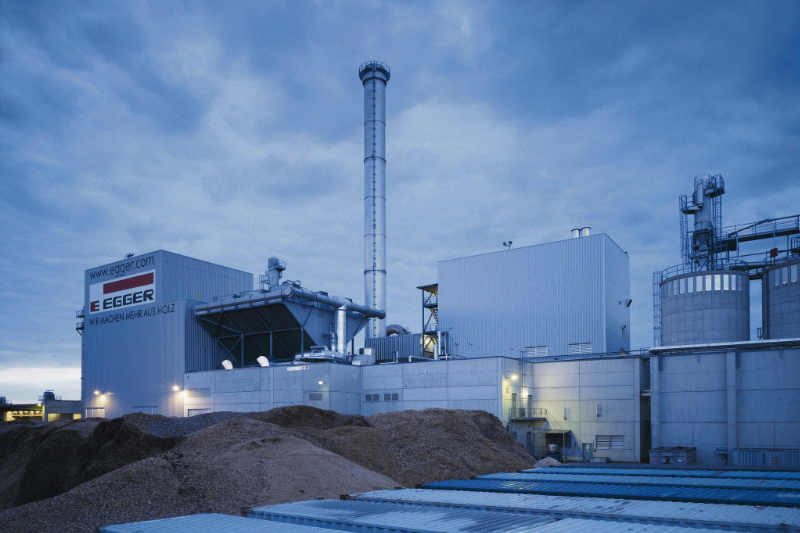
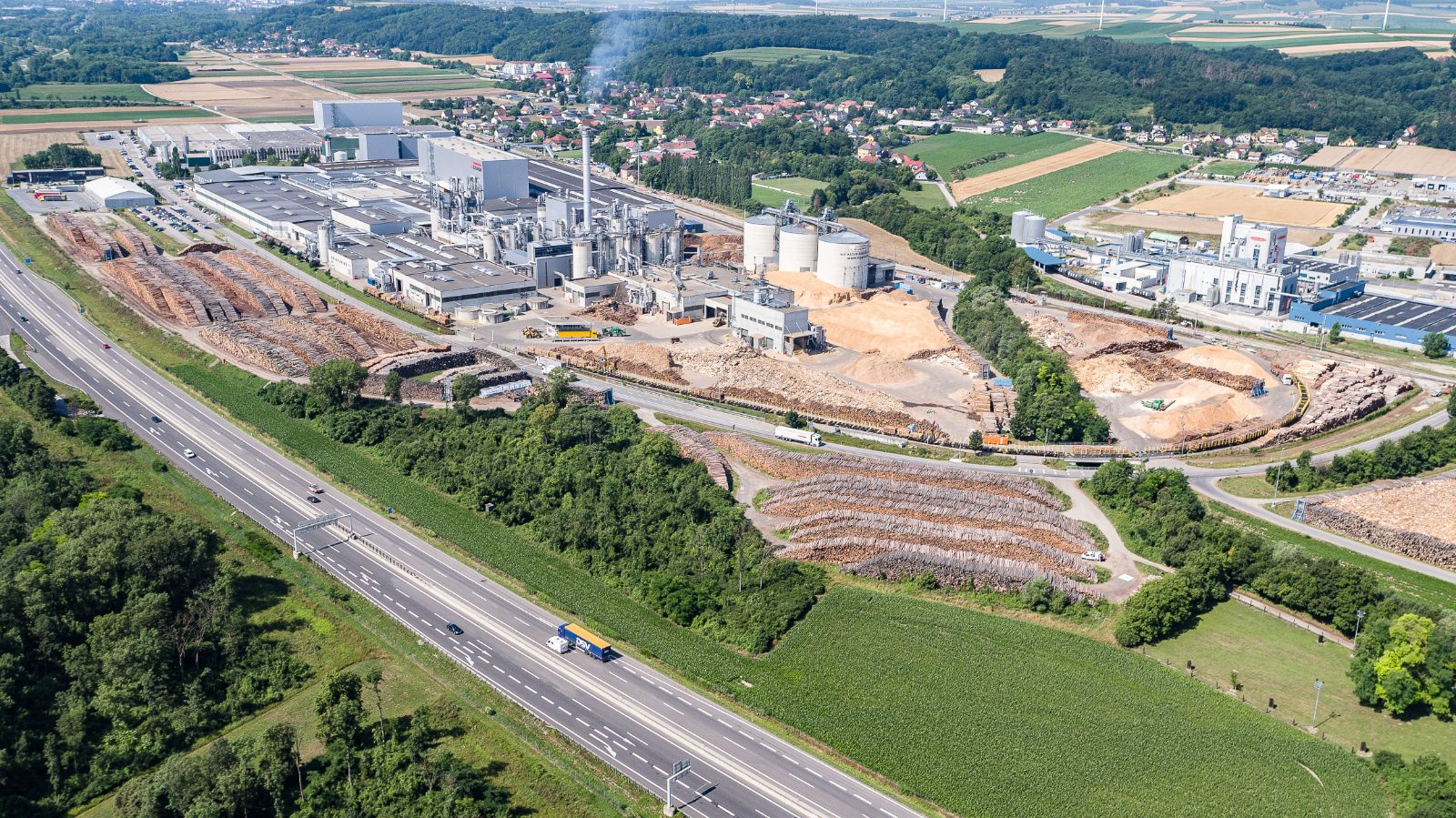
Egger already supplies St Polten’s district heating scheme with sustainable waste heat from the waste treatment plant at its Durnrohr plant 15miles away from Lower Austria’s state capital. By the end of next year the town’s 60,000 residents will see the network receive heat from Egger’s Unterradlberg facility [pictured above].
‘Over the past few years, we have invested massively in renewable energy supply at our plant in several stages. In two biomass power plants, we generate renewable electricity and heat from biogenic fuels for our own processes. We produce at our plant in normal operation without natural gas and are already supplying heat to neighbouring companies. We are pleased that we can now take the next step as part of a comprehensively conceived regional energy concept and will soon be able to supply district heating to the city of St Polten,’ says Martin Wurzl, Egger plant director for technical/production.
At the heart of the investment plan is a new steam turbine that will be installed at Egger’s Unterradlberg plant. It will generate around 4.77MW of electricity for the plant from the steam from one of its two biomass boilers [pictured left].
This will raise the proportion of electricity generated on site to around 87%.
The resulting exhaust steam will then be used for district heating. A new heat pump will feed heat into the district heating network using the turbine exhaust steam from the plant’s second turbine and biomass boiler.
‘The fuels used will be, for example wood dust from our own production, wood waste and biogenic production residues that can no longer be used as materials. In total, around 10MW of hot water will be delivered into the district heating pipeline during the winter months, which corresponds to around 10% of the heat demand of district heating customers in the town,’ says Wurzl.
‘This additional benefit is achieved without a higher fuel input, meaning the overall efficiency of the energy facilities can be significantly increased. In this way, the use of natural gas in district heating network operations can be further reduced and replaced by heat from renewable energy.’