UK SUSTAINABLE FLOORING ALLIANCE
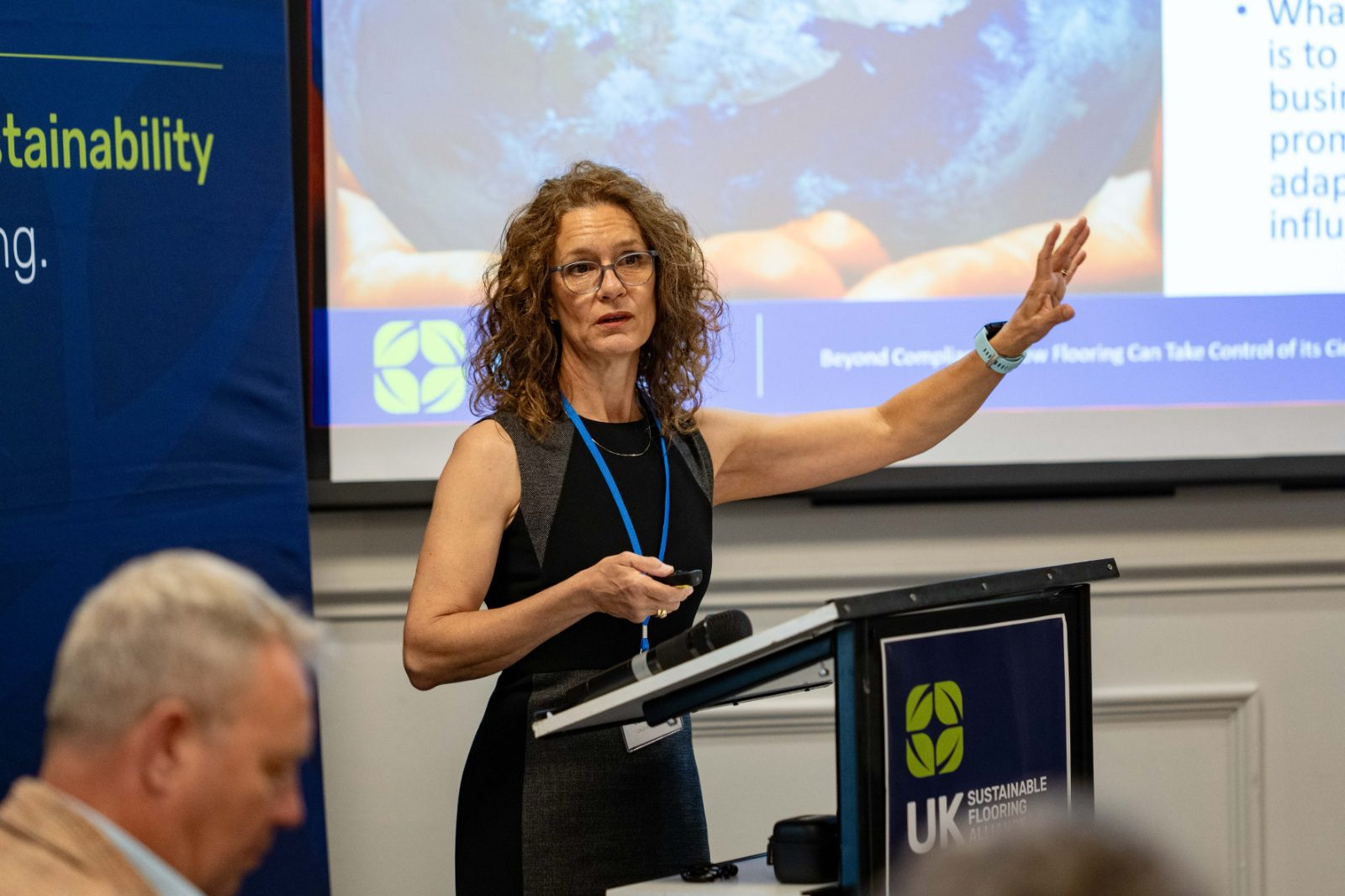
‘The term circular economy is increasingly used across our sector, and at its simplest, it represents a move away from the traditional take–make–waste model. Instead of extracting raw materials, manufacturing products and disposing of them at the end of their life, a circular approach keeps materials in use for as long as possible through reuse, repair and recycling,’ says Cathie Clarke, UKSFA ceo.
Originally founded in 2007 as Carpet Recycling UK, the UKSFA supports and represents the flooring industry in its efforts to adopt sustainable practices, foster innovation and meet evolving environmental and regulatory standards. Through collaboration and advocacy, UKSFA aims to drive a more sustainable and responsible future for the sector.
The UK Green Building Council describes the circular economy as an approach that prioritises reuse and reduces valuable materials being sent to landfill. More than 400,000tonnes of flooring waste, including carpet, rugs and mats, is generated in the UK each year, with resilient flooring products such as vinyl, LVT and linoleum adding significantly to this volume.
Reducing waste is essential if the sector is to lower its environmental impact and contribute towards net-zero ambitions.
What does the jargon mean? Circular economy: Keeping materials in use for as long as possible through reuse, repair, recycling and better design. Closed loop: Waste is recycled back into new products within the same sector, without loss of quality. Open loop: Waste is recycled into products for a different industry or application. Reuse: Using products or components again for the same purpose. Repurpose: Using a product for a different function without major alteration. Recycle: Processing used materials into new resources.
‘A circular flooring model considers the entire lifecycle of a product: products can be designed to be reused, repaired or recycled at the end of their service life, while some manufacturers are already developing products with improved recyclability, increased recycled content and take-back schemes. Natural materials such as wood and stone are often easier to incorporate into circular systems because they can be reused or broken down more readily. However, textile and resilient flooring products can present greater challenges due to their complex, multi-layered construction.
‘Installation methods also play a major role. Adhesive-based installations can make products harder to recover during uplift, limiting opportunities for reuse. As a result, manufacturers are exploring alternative methods and improved product designs to support easier removal and recycling. By considering a product’s full lifecycle from the outset, the industry can create flooring solutions that deliver long-term performance while reducing waste. The circular economy presents environmental and commercial opportunities for the retail supply chain. Reducing waste can lower disposal costs, while durable, reusable and recyclable products can deliver long-term value.
‘Through take-back and extended producer responsibility working groups, UKSFA is supporting members and wider stakeholders in developing practical solutions to accelerate sustainability and circularity across the sector. Our TakeMyFlooring portal is also designed to help contractors quickly find flooring take-back and recycling services across the UK, while supporting the transition towards a more circular economy.’