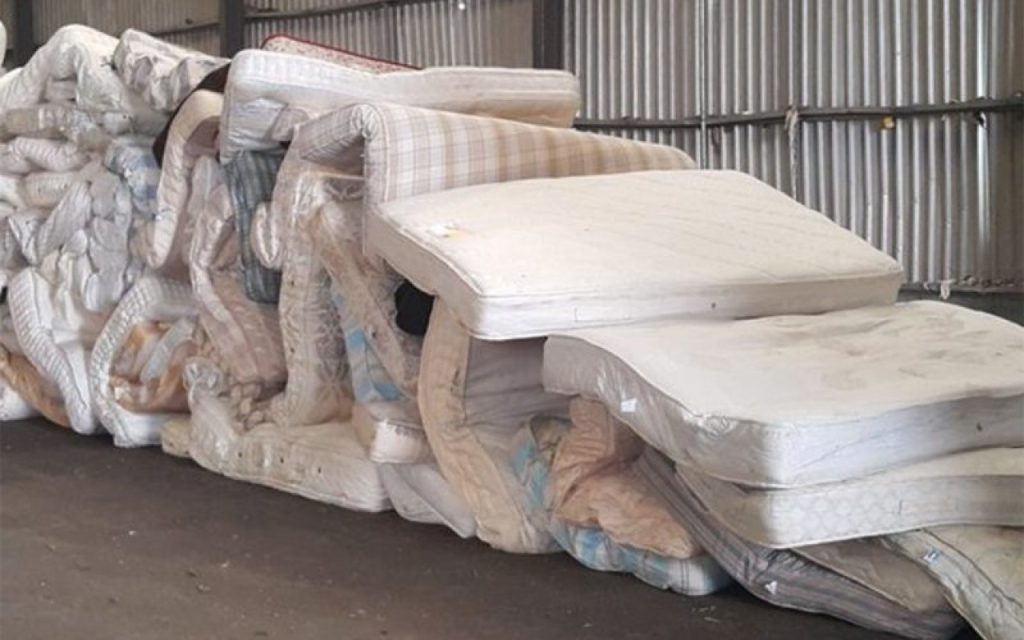


There has been a marked improvement in mattress recycling rates across the UK, but the bed industry is still far short of its 2028 targets and that greater investment and regulation is required if these are to be achieved.
56% of mattresses were sent for recycling in 2023 – more than double the estimated 25% figure in 2021, according to the National Bed Federation’s latest End of Life Mattress Report, the fifth.
The rate of actual material recovery – ‘real recycling’ has jumped from 14% in 2020 to 33%.
‘The latest figures are encouraging and demonstrate real progress across the sector: particularly in terms of mattresses being diverted from landfill. But we cannot ignore the challenges that remain, especially around inconsistent practices, limited infrastructure and financial barriers,’ says Tristine Hargreaves, NBF executive director.
The report also found the number of mattress disposals decreased by 27% compared 2020’s figures, suggesting that replacement rates are slowing, and use periods are extending, possibly due to economic challenges.
While more retailers are engaging with sustainability and circularity, significant barriers remain: larger retailers face complex supply chains, while smaller businesses often lack the capital to invest, it warns. Circularity also still takes a back seat to consumer concerns like price, comfort and durability.
The report, produced on behalf of the NBF by environmental consultant Resource Futures, found that reuse remains a small part of the end-of-life picture. Key challenges for mattress reuse and rejuvenation include hygiene concerns, cost and logistics and changing consumer perceptions. Recyclers continue to face challenges sourcing clean, quality mattresses. Financially, success relies on finding value in recovered materials such as polyester, springs, and some foams, although these markets remain volatile.
The report also highlights growing concerns about unethical practices. Recyclers warn that some manufacturers are reusing components without proper disclosure, damaging industry integrity.
There is currently no legal obligation for local authorities, manufacturers, or retailers to recycle mattresses, leading to inconsistent collection, processing, and recycling practices across the UK.
Hargreaves reiterated the association’s call for an extended producer responsibility (EPR) scheme that includes mandatory take-back, funding for infrastructure and consistent nationwide standards. ‘Government-led policy is crucial to achieving the NBF target of 75% of mattresses diverted from landfill by 2028. Hopefully the report will help unite retailers, manufacturers, recyclers, and policymakers around a shared vision for a more sustainable UK mattress industry.’
The full report can be downloaded from the NBF website.
: https://www.bedfed.org.uk/nbf-green/nbf-recycling-reports/
– ENDS –
Press Contact: for further information, please contact Tom Williams, NBF sustainability & circular economy lead, [email protected], 01756 799950
Note to Editors:
The National Bed Federation is the recognised trade association representing UK manufacturers of beds and their suppliers. Founded in 1912, its members today account for about 75% of the total UK mattress sector turnover.
The fifth mattress recycling report was produced on behalf of the NBF by environmental consultants Resource Futures. www.resourcefutures.co.uk
There is currently no legal obligation for local authorities, manufacturers, or retailers to recycle mattresses, leading to inconsistent collection, processing, and recycling practices across the UK. As such, the NBF requested research into the End of Life (EoL) management of mattresses in the UK in 2023, following four previous reports which focussed on the period 2012-2020. This report adopted a mixed method approach to understand and analyse the journey of mattresses through their production, sale, use, collection, disposal and final treatment stage.
www.bedfed.org.uk National Bed Federation Ltd, High Corn Mill, Chapel Hill, Skipton, BD23 1NL