
Material and design choices are vital
Sustainability in the mattress industry is often framed as a forward-looking challenge.
Yet, in many ways, it is also a return to materials and principles that have supported human comfort for centuries. Long before the introduction of polyurethane foam, people slept on natural fibres: materials that were breathable, resilient and inherently circular. Natural materials such as wool and cotton were not alternatives: they were the standard.
‘Today, as the industry faces increasing pressure to reduce its environmental impact, these materials – and others – are once again becoming central to how we think about design, performance and responsibility. At Enkev, we see this shift not as a trend but
a necessary evolution,’ says Chris Francis, Enkev UK md. ‘Sustainability can no longer
be addressed at a single stage of the product lifecycle. It must be designed into the product from the very beginning. Eco-design is becoming a critical driver, requiring manufacturers to consider not only how a mattress performs but also how it is made, what it is made from and what happens at the end of its life.’
This means selecting materials that are renewable, traceable and can be safely
returned to the environment and designing products that allow for separation, recovery and reuse, rather than creating complex constructions that ultimately end up as landfill.
‘Manufacturing processes are evolving. Reducing energy consumption, limiting the
use of chemicals and improving supply chain transparency are no longer optional:
they are becoming industry expectations. The challenge is not only to innovate but to
do so in a way that is both scalable and commercially viable,’ says Francis.
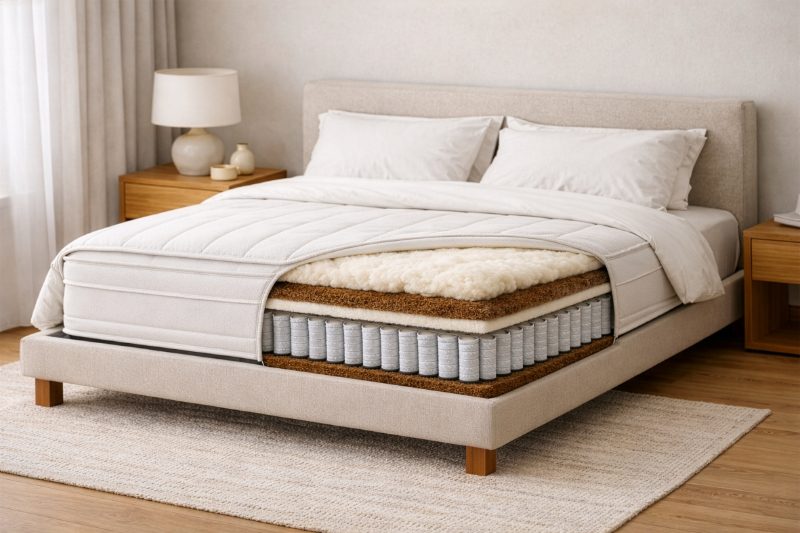
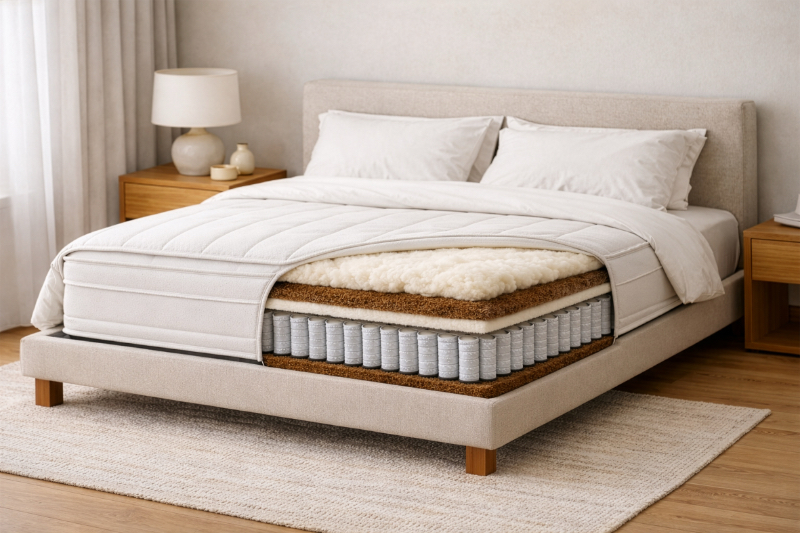
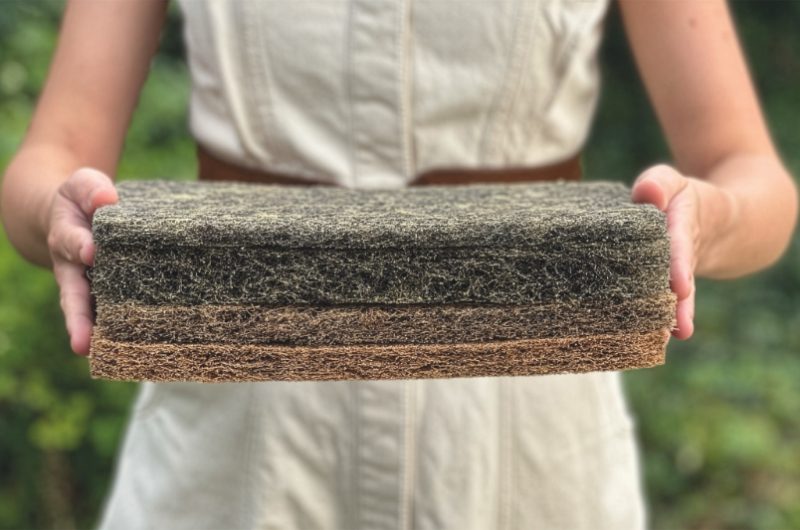
Natural fibres offer a unique advantage in this transition. Enkev’s PURe materials,
such as coconut fibres and horsehair, are sustainable by origin and deliver inherent performance benefits. Their structure allows for ventilation, moisture regulation and durability: characteristics that synthetic materials often attempt to replicate.
‘True sustainability extends beyond materials and manufacturing. Packaging, logistics and end-of-life solutions are increasingly part of the conversation. While mattress recycling remains complex, progress is being made through improved material
selection and system-level thinking. At Enkev, we work closely with our partners to develop solutions that integrate these elements, combining natural materials with engineering expertise to create products that are both high-performing and
future-ready,’ says Francis.
‘Achieving greater sustainability in the bedding sector is not the result of a single innovation but of many inter- connected decisions, made across the entire value
chain. In that sense, the future of sleep may not be entirely new. Instead, it may be
a refinement of what has always worked: natural materials, intelligently applied and designed for the world we live in today.’