
Take an often overlooked mattress element and make it sustainable
Sustainability in bed manufacturing is no longer optional: it’s now an industry expectation. As consumers increasingly demand natural materials and greater chemical transparency, manufacturers are being challenged to rethink even the smallest components within mattress construction.
‘At Handy, this led us to re-engineer one of the most overlooked elements of a mattress: the narrow-woven tape edge. Traditionally, tape edges are produced using polyester, polypropylene or other man-made yarns. While these materials offer strength and efficiency, they often require additional fire-retardant chemical treatments or can emit harmful substances when exposed to flame. For brands striving to create more natural sleep environments, this presents a clear contradiction,’ says Sara Morris, Handy operations director.
‘Our objective was to develop a tape edge that combined natural, eco-friendly properties with inherent FR performance but without chemical intervention. Cotton was quickly
ruled out due to its flammability. Wool, however, offered a compelling solution. Naturally flame-resistant, renewable and biodegradable, wool aligns strongly with sustainability goals. The challenge was technical: narrow weaving looms are designed for synthetic yarns, while wool is more commonly knitted.
‘To overcome this, we sourced a specialist wool yarn fine enough for narrow weaving
yet strong enough to match synthetic performance. Looms required modification, weaving speeds were reduced, and improved extraction systems were introduced to manage fibre debris. A dedicated wool production area was also established to maintain consistency.’
The result is a narrow-woven wool tape edge delivering inherent FR performance
without chemical flame retardants. Sustainability gains extend to colour flexibility. Wool can be dyed in smaller batches of around 20,000m, allowing bespoke colours with lower minimum orders. Only organic dyes certified to Global Organic Textile Standard (GOTS) are used.
‘As suppliers to the bedding sector, we have a responsibility to rethink established materials and pursue safer, more sustainable alternatives,’ says Nick Harland-Smith, Handy md and co-founder. ‘Since its introduction, demand has grown rapidly, with the one millionth metre produced earlier this year. True sustainability lies in the detail, and sometimes meaningful change begins at the edge.’
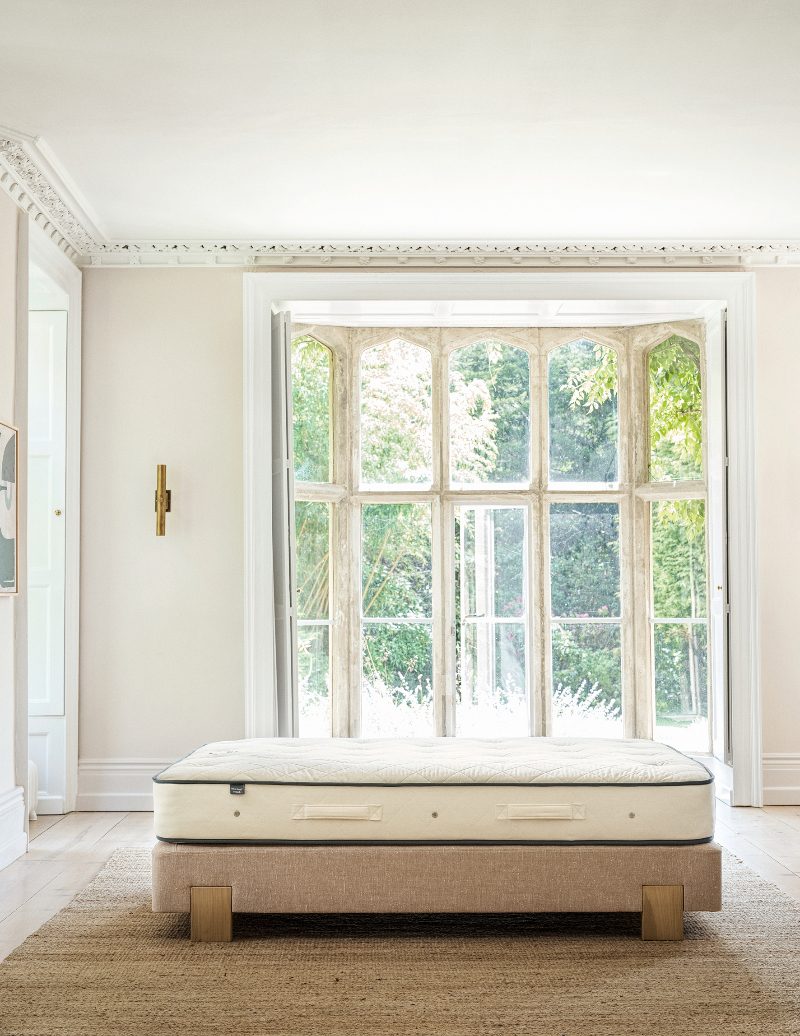
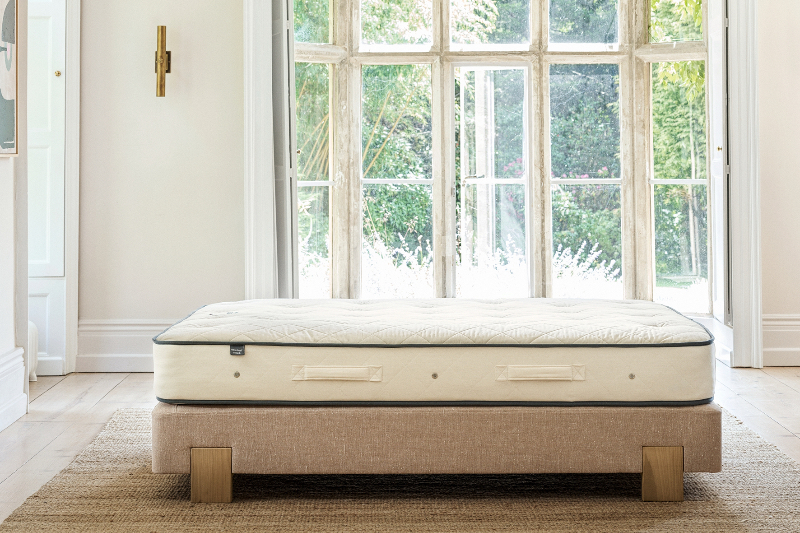
Image: Naturalmat uses Handy’s narrow-woven tape edge